
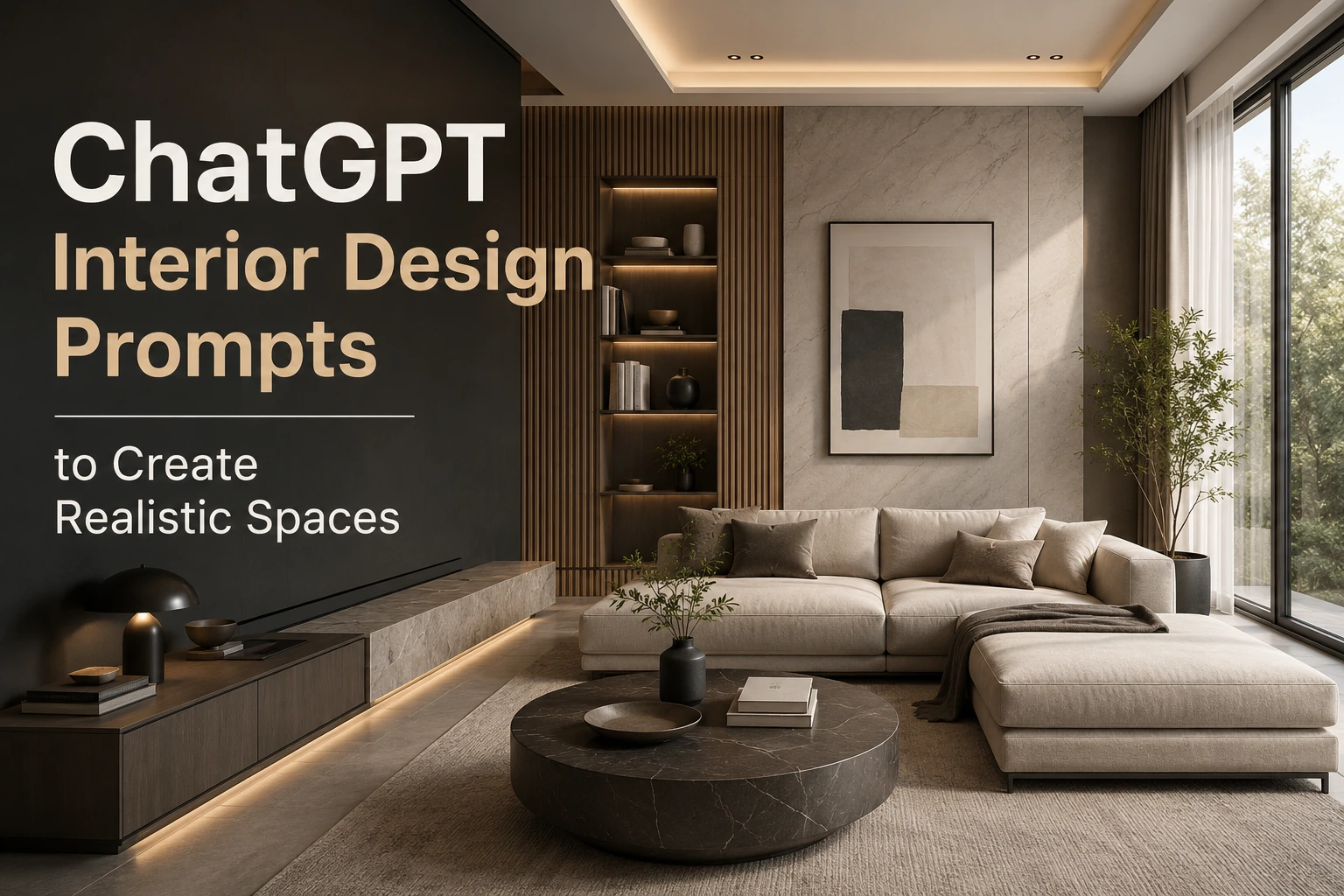
Interior design is no longer limited to professional architects or expensive software. With the power of chatgpt interior design prompts, anyone can now create realistic and visually stunning room concepts in seconds.
From modern living rooms to minimalist bedrooms and functional home offices, AI can help you explore layouts, materials, lighting, and styles before making real design decisions.
In this guide, you will learn how to write effective prompts that generate realistic interior spaces and avoid common mistakes that make AI designs look fake.
Best ChatGPT Interior Design Prompts (Copy and Paste)
The quality of AI-generated interiors depends heavily on the prompt you provide.
Well-structured chatgpt interior design prompts help DALL-E 3 create realistic layouts, balanced furniture placement, and professional lighting instead of random room designs.
Below are some of the most effective copy-paste prompts for popular interior design styles in 2026.
Modern Luxury Living Room Prompt
Modern luxury interiors focus on elegance, premium materials, and sophisticated lighting.
Use this chatgpt interior design prompt:
Create a photorealistic modern luxury living room with [room size] dimensions.

Feature a large marble coffee table, premium sectional sofa, floor-to-ceiling windows, subtle gold accents, and custom-built shelving.

Warm ambient lighting, hidden LED lighting, balanced furniture layout, neutral color palette with [primary color], realistic textures, interior design photography, ray tracing, volumetric lighting, ultra-realistic architectural rendering, high resolution.
This style typically includes:
- Marble surfaces
- Premium fabrics
- Soft indirect lighting
- Neutral color schemes
- Luxury decorative elements
The combination of luxury materials and realistic lighting creates a high-end visual appearance.
Minimalist Japandi Bedroom Prompt
Japandi design combines Japanese simplicity with Scandinavian functionality.
It remains one of the most popular styles for homeowners seeking calm and clutter-free spaces.
Example chatgpt interior design prompt:
Design a minimalist Japandi bedroom with [room size] dimensions.

Use natural wood furniture, low-profile bed frame, earth-tone color palette, linen textiles, minimal decor, and large windows for natural light.

Open space layout, clean lines, soft shadows, organic materials, warm neutral colors, photorealistic architectural rendering, interior design photography, realistic textures, ultra-detailed, high resolution.
Key Japandi elements include:
- Natural wood
- Soft beige tones
- Minimal furniture
- Functional decor
- Calm visual balance
This style works particularly well for bedrooms because it promotes relaxation and simplicity.
Industrial Style Home Office Prompt
Industrial interiors combine raw materials with modern functionality.
They are especially popular for creative workspaces and home offices.
Use this chatgpt interior design prompt:
Create an industrial-style home office with [room size] dimensions.

Exposed brick walls, concrete surfaces, black metal shelving, wooden desk, ergonomic office chair, modern computer setup, and large factory-style windows.

Natural daylight mixed with warm accent lighting, realistic shadows, balanced composition, photorealistic architectural rendering, ray tracing, interior design photography, ultra-realistic materials, high resolution.
Common industrial design features include:
- Exposed brick
- Concrete finishes
- Dark metal accents
- Reclaimed wood
- Open layouts
These elements help create a professional workspace that feels both modern and creative.
Using detailed chatgpt interior design prompts like these gives the AI enough information to generate realistic spaces while maintaining practical furniture placement and visual harmony.
ChatGPT Interior Design Prompts by Room Type
Different rooms serve different purposes, which means they require different prompt structures.
The best chatgpt interior design prompts clearly describe the room’s function, furniture layout, materials, lighting, and overall atmosphere. This helps DALL-E 3 generate spaces that look both beautiful and practical.
Below are ready-to-use prompts for some of the most popular room types.
Living Room Design Prompt
The living room is often the focal point of a home, making it one of the most requested AI interior design projects.
Use this prompt:
Create a photorealistic living room with [room size] dimensions and a [design style] aesthetic.

Include a comfortable sofa, coffee table, accent chairs, area rug, modern lighting fixtures, and decorative shelving.

Balanced furniture layout, natural lighting from large windows, realistic materials, warm atmosphere, interior design photography, ray tracing, volumetric lighting, ultra-realistic architectural rendering, high resolution.
You can customize:
[room size][design style][color palette][main material]
Popular styles include:
- Modern luxury
- Minimalist
- Scandinavian
- Japandi
- Contemporary
A well-designed living room prompt should focus on comfort, flow, and visual balance.
Kitchen Design Prompt
Kitchen designs require both functionality and aesthetics.
A good chatgpt interior design prompt should specify storage, workspace organization, lighting, and material selection.
Example prompt:
Design a photorealistic kitchen with [room size] dimensions and a [design style] theme.

Include custom cabinetry, kitchen island, premium countertops, modern appliances, integrated storage solutions, and pendant lighting.

Functional layout, realistic materials, natural lighting, clean composition, architectural visualization, ray tracing, interior design photography, ultra-detailed rendering, high resolution.
Common kitchen materials include:
- Marble countertops
- Quartz surfaces
- Natural wood cabinets
- Matte black hardware
- Brushed metal finishes
The best kitchen designs balance beauty with everyday usability.
Home Office Design Prompt
As remote work continues to grow, home offices have become one of the most searched categories for chatgpt interior design prompts.
A productive workspace should combine comfort, organization, and professional aesthetics.
Use this prompt:
Create a photorealistic home office with [room size] dimensions and a [design style] aesthetic.

Include a large desk, ergonomic chair, dual-monitor setup, built-in shelving, organized storage, and decorative elements that support productivity.

Natural daylight, balanced ambient lighting, realistic materials, clean workspace layout, architectural rendering, ray tracing, interior design photography, ultra-realistic details, high resolution.
Popular home office styles include:
- Modern minimalist
- Industrial
- Scandinavian
- Executive luxury
- Creative studio
When evaluating AI-generated office designs, focus on functionality first and decoration second.
If you later want to enhance generated room images, adjust colors, or remove unwanted design elements, techniques similar to those covered in our chatgpt prompts for photo editing guide can help refine AI-generated interior visuals even further.
Advanced Keywords That Make AI Interiors Look Real
One of the biggest differences between average and professional-looking AI interiors is the use of advanced visualization keywords.
Many beginners write simple prompts such as:
modern living roomWhile this may generate a room image, the result often lacks realism and architectural quality.
Professional chatgpt interior design prompts use specialized keywords that help DALL-E 3 create interiors that look closer to real architectural visualizations and professional photography.
Photorealistic Architectural Rendering
This is one of the most powerful keywords you can add to any interior design prompt.
The term tells the AI to create an image that resembles a professional architectural visualization rather than a digital illustration.
Useful keywords include:
photorealistic architectural renderingultra-realistic interior visualizationarchitectural visualizationhigh-end interior renderingThese phrases help improve:
- Material realism
- Furniture details
- Room proportions
- Surface textures
- Overall visual quality
Example:
Modern luxury living room, photorealistic architectural rendering, realistic materials, premium furniture, high-end interior visualization.This simple addition can dramatically improve image quality.
Ray Tracing and Volumetric Lighting
Lighting is one of the most important factors in realistic interior design.
Without proper lighting instructions, AI-generated rooms can look flat and artificial.
Professional visualization keywords include:
ray tracingglobal illuminationvolumetric lightingrealistic shadowsnatural light diffusionThese terms help create:
- Realistic reflections
- Better shadow depth
- Natural sunlight behavior
- More immersive environments
Example prompt section:
Ray tracing, volumetric lighting, realistic shadows, natural daylight entering through large windows.The result is often much closer to professional architectural renders used by interior designers and real estate developers.
Interior Design Photography Style
Another effective technique is asking the AI to imitate professional interior photography.
This helps create images that look like they were captured by a real camera instead of generated by AI.
Useful keywords include:
interior design photographyarchitectural photographyprofessional real estate photographywide-angle interior photographymagazine-quality interior photoThese terms improve:
- Camera composition
- Perspective accuracy
- Lighting realism
- Spatial depth
The concept is similar to how visual control keywords improve other creative AI projects. For example, in our chatgpt prompts for logo design guide, specific design keywords help generate cleaner and more professional branding concepts. The same principle applies here—better keywords produce better results.
When combined with realistic materials, proper furniture placement, and architectural terminology, these advanced chatgpt interior design prompts can generate images that closely resemble professional interior design presentations.
Customizable Interior Design Prompt Template
One of the biggest advantages of chatgpt interior design prompts is flexibility.
Instead of writing a completely new prompt for every project, you can use a customizable template and simply replace key details based on your room, style, and design goals.
This approach saves time and helps maintain consistency across different interior concepts.
Here is a universal template:
Create a photorealistic [room type] with [room size] dimensions in a [design style] aesthetic.

Use [main materials] and a [color palette] color scheme. Include [furniture items] arranged in a practical and visually balanced layout.

Natural lighting combined with [lighting style], realistic textures, interior design photography, photorealistic architectural rendering, ray tracing, volumetric lighting, ultra-detailed, high resolution.
You can customize each section depending on your project requirements.
Adjust Room Size and Layout
Room dimensions play a major role in how AI generates furniture placement and spatial flow.
Replace the placeholder:
[room size]with examples such as:
small apartment living roommedium-sized bedroomlarge open-concept living areaYou can also define layout preferences:
open floor planL-shaped layoutsymmetrical furniture arrangementProviding room size information helps the AI create more realistic and practical spaces.
Change Materials and Color Palette
Materials and colors have a huge impact on the mood of an interior.
The placeholder:
[main materials]can be customized with:
- Natural oak wood
- White marble
- Concrete surfaces
- Black metal accents
- Walnut cabinetry
For color schemes, replace:
[color palette]with options like:
- Warm beige and cream
- Earth-tone neutrals
- Black and gold luxury palette
- Soft Scandinavian whites
- Deep charcoal and wood tones
Example:
natural oak wood, warm beige and cream color paletteCombining complementary materials and colors often produces the most realistic interior visualizations.
Customize Furniture and Decor
Furniture selection determines both functionality and style.
Replace:
[furniture items]with furniture that matches the room’s purpose.
Examples:
For a living room:
sectional sofa, coffee table, accent chairs, floor lampFor a bedroom:
platform bed, nightstands, reading chair, wardrobeFor a home office:
executive desk, ergonomic chair, bookshelves, dual-monitor setupYou can also add decorative elements such as:
- Indoor plants
- Abstract artwork
- Floating shelves
- Decorative lighting
- Area rugs
The more specific your furniture instructions are, the easier it becomes for AI to generate interiors that feel intentional, functional, and professionally designed.
By combining room size, materials, colors, and furniture choices, these customizable chatgpt interior design prompts can be adapted to almost any interior design project.
Common Mistakes That Make AI Interior Designs Look Unrealistic
Even with advanced chatgpt interior design prompts, many users still get results that look artificial, impractical, or visually confusing.
The problem is usually not the AI itself, but how the prompt is written. Small mistakes in structure or detail can completely break realism in interior design outputs.
Below are the most common issues you should avoid.
Overcrowding the Space
One of the fastest ways to ruin an AI interior design is adding too many objects.
When a prompt includes excessive furniture or decor, the AI often produces:
- Cluttered rooms
- Unbalanced layouts
- Unrealistic spacing
- Visually overwhelming compositions
For example, a bad prompt might look like this:
living room with sofa, 3 coffee tables, 6 chairs, 10 plants, 5 lamps, multiple rugs, wall decorations everywhereThis creates visual chaos instead of a livable space.
A better chatgpt interior design prompt keeps things simple:
minimal living room with sofa, coffee table, one accent chair, and indoor plantReal interior design is about balance, not quantity.
Mixing Too Many Design Styles
Another common mistake is combining conflicting design styles in one prompt.
For example:
- Modern + Rustic + Industrial + Classic + Futuristic (all at once)
This confuses the AI and leads to inconsistent results such as:
- Mismatched furniture
- Random textures
- Broken visual identity
- Unrealistic architecture
Example of a confusing prompt:
luxury modern industrial rustic Scandinavian futuristic living roomInstead, focus on one clear direction:
modern minimalist living room with clean lines and neutral tonesA strong chatgpt interior design prompts strategy always prioritizes clarity over complexity.
Ignoring Lighting and Functionality
Lighting is one of the most important elements in interior design, yet it is often ignored in prompts.
Without proper lighting instructions, AI-generated rooms can look:
- Flat and lifeless
- Too dark or too bright
- Physically unrealistic
- Poorly balanced in shadows
Similarly, ignoring functionality leads to spaces that look beautiful but impossible to use in real life.
Weak prompt example:
beautiful stylish roomImproved version:
modern living room with natural daylight from large windows, soft ambient lighting, functional furniture layout, and realistic shadowsKey lighting keywords include:
- natural daylight
- soft ambient lighting
- warm interior lighting
- realistic shadows
- volumetric light
When writing chatgpt interior design prompts, always think like an interior designer, not just a visual artist.
A good design must be both visually appealing and physically believable.
Final Thoughts
Working with chatgpt interior design prompts gives you a fast and creative way to visualize realistic spaces without needing complex 3D software or technical skills. With the right structure, you can generate interiors that look balanced, functional, and visually inspiring in just a few seconds.
Create Professional Interior Concepts With AI
AI is now powerful enough to help you explore full interior design ideas before making real-world decisions. From living rooms and bedrooms to kitchens and home offices, you can quickly test different styles, layouts, and materials.
The key is consistency: use clear room descriptions, realistic lighting instructions, and strong architectural keywords like photorealistic rendering and natural lighting. This ensures your chatgpt interior design prompts produce results that feel practical, not just artistic.
Use ChatGPT Prompts to Visualize Your Dream Space
Instead of guessing how a space might look, you can now generate multiple design versions and compare them instantly. This helps you refine your ideas before investing time or money in real renovations.
If you want to further improve or adjust the generated interiors—such as changing colors, fixing lighting issues, or removing unwanted objects—you can apply advanced techniques similar to those explained in our guide about chatgpt prompts for photo editing, which helps refine AI-generated visuals into more polished and realistic results.
Ultimately, mastering chatgpt interior design prompts is about combining creativity with control, allowing you to design spaces that truly match your vision.
Using chatgpt interior design prompts is a practical and creative way to bring your dream spaces to life without technical barriers or high costs.
By combining clear room descriptions, realistic lighting terms, and well-structured design styles, you can generate interiors that feel both functional and visually appealing.
Whether you are planning a renovation or simply exploring ideas, AI helps you experiment faster and smarter, turning your vision into realistic interior concepts in 2026 and beyond.
