
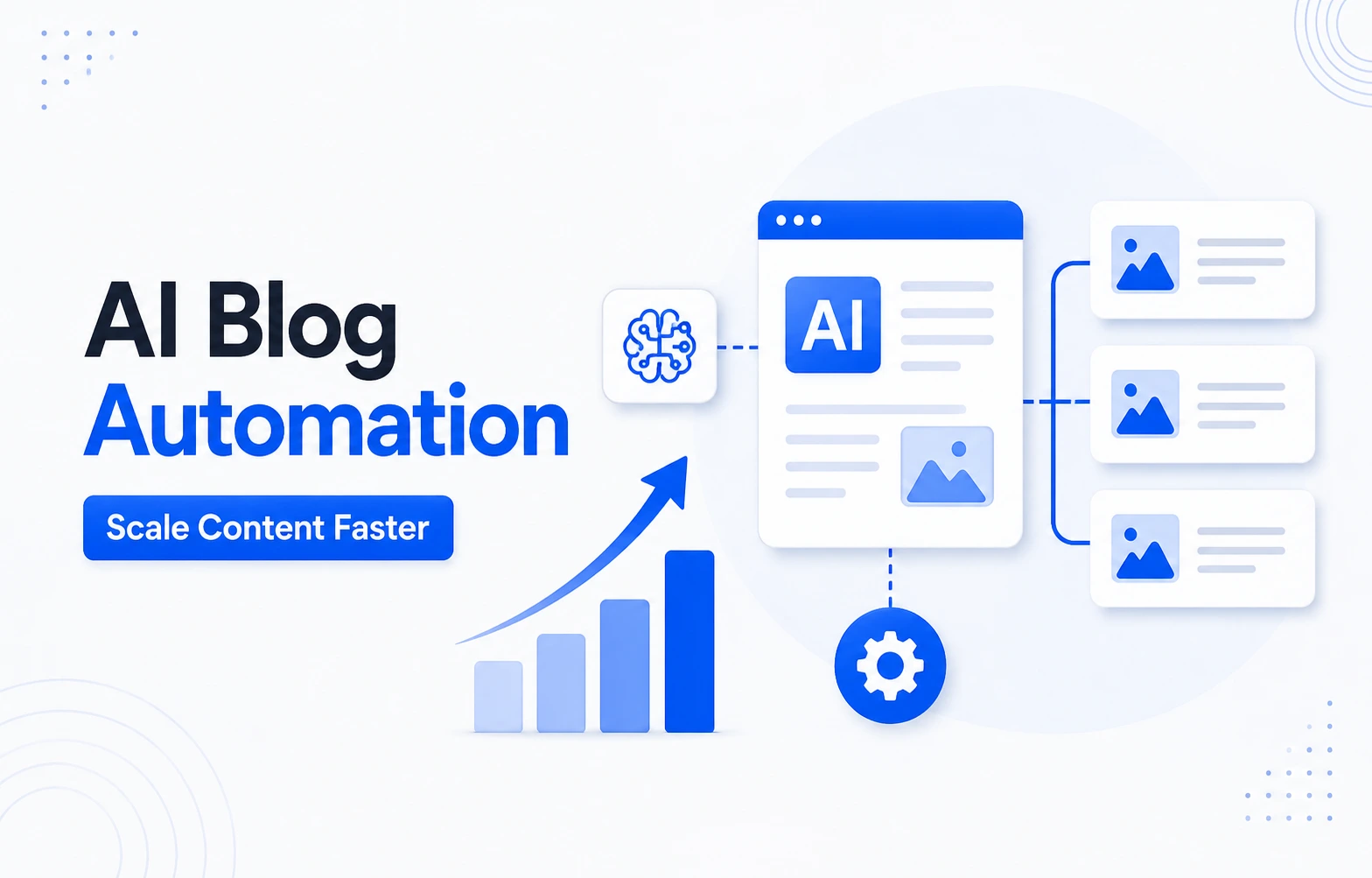
Growing a successful blog takes more than writing great content—it requires a fast and efficient publishing system. AI blog automation helps you automate content creation, SEO tasks, internal linking, and WordPress publishing, allowing you to scale your website while focusing on quality and long-term growth.
What Is AI Blog Automation?
AI blog automation is the process of using artificial intelligence and automation tools to streamline content creation, optimization, and publishing. Instead of handling every task manually, publishers can automate repetitive steps such as keyword organization, article drafting, image generation, formatting, and publishing while maintaining editorial oversight.
The goal is not to replace human expertise but to reduce repetitive work, allowing content teams to focus on strategy, quality, and audience value.
How AI Blog Automation Works
An AI blog automation workflow connects several tools to handle different stages of the publishing process.
For example, keyword data can be collected from SEO tools or spreadsheets, passed to an AI writing platform to generate a draft, reviewed by an editor, formatted automatically for WordPress, and then scheduled for publication. Some workflows also generate featured images, write meta descriptions, and organize internal links before publishing.
Most publishers build these workflows using APIs, webhooks, or no-code automation platforms that connect their favorite applications.
What Can Be Automated
Modern AI blog automation covers much more than article writing.
Common tasks that can be automated include:
- Organizing keyword lists
- Generating article outlines
- Creating first drafts
- Writing meta titles and meta descriptions
- Formatting headings and content
- Generating featured images
- Creating image alt text
- Scheduling WordPress posts
- Updating internal links
- Republishing or refreshing existing articles
While many tasks can be automated, human review remains essential for fact-checking, editing, and ensuring the content matches your brand voice.
Why Publishers Are Adopting It
As websites grow, manually managing hundreds or thousands of articles becomes increasingly difficult.
AI blog automation helps publishers scale content production without significantly increasing workload. It also improves publishing consistency, reduces repetitive tasks, and makes it easier to maintain large content libraries.
For publishers building topical authority across many related subjects, automation provides a practical way to support long-term content growth while keeping editorial processes organized.
Benefits of AI Blog Automation
AI blog automation offers more than faster content creation. When implemented correctly, it helps publishers build efficient workflows that support consistent publishing while reducing manual effort.
Publish More Content in Less Time
Creating high-quality articles involves research, outlining, writing, formatting, and optimization.
Automation reduces the time spent on repetitive steps, allowing publishers to produce more content without sacrificing quality. Instead of starting every article from scratch, AI can generate structured drafts that editors review and refine before publication.
Reduce Content Production Costs
Producing content manually often requires multiple tools and significant human effort.
AI automation streamlines many repetitive tasks, helping individuals and teams create more articles with the same resources. This can lower operational costs while allowing editors to focus on improving content quality instead of repetitive formatting and publishing work.
Improve Publishing Consistency
Consistent publishing helps websites stay active and build topical authority over time.
Automation makes it easier to maintain a regular publishing schedule by handling repetitive tasks such as formatting, scheduling posts, and generating metadata. This reduces delays caused by manual processes and keeps content production organized.
Scale Programmatic SEO Safely
Programmatic SEO allows publishers to create large collections of pages targeting related search queries.
AI automation can support this strategy by generating structured content from approved templates and organized datasets. However, every page should provide unique value, accurate information, and satisfy search intent. Human review remains important to avoid thin, duplicate, or low-quality content that may perform poorly in search results.
Best AI Blog Automation Tools in 2026
The right AI blog automation tool depends on your publishing workflow, content volume, and website platform. Some platforms focus on large-scale content generation, while others automate publishing, SEO optimization, or ongoing website improvements.
The comparison below highlights several popular AI blog automation solutions available in 2026.
| Tool | Core Automation | Integrations | SEO Advantage |
|---|---|---|---|
| Byword.ai | Bulk AI content generation from keyword lists and datasets | WordPress, Webflow, Shopify, API | Supports large-scale content publishing and programmatic SEO workflows |
| Journalist AI | Automated research, writing, and scheduled publishing | WordPress, Ghost, Shopify, Google Drive | Automatically creates articles with images, internal links, and publishing workflows |
| KoalaWriter / Autoblogging | AI-assisted long-form content generation using web search | WordPress integration | Produces up-to-date articles using current online information and structured formatting |
| Seona AI | Website SEO automation and content optimization | Multiple CMS platforms through integrations | Identifies SEO opportunities and helps improve existing content automatically |
Byword.ai
Byword.ai is designed for publishers who need to generate content at scale. It supports bulk article creation from keyword lists or structured datasets, making it a popular choice for programmatic SEO projects. Direct integrations with major CMS platforms simplify publishing large numbers of articles.
Journalist AI
Journalist AI focuses on end-to-end content automation. It can research topics, generate articles, create supporting images, organize internal links, and publish content automatically on supported platforms. This makes it suitable for publishers who want a highly automated editorial workflow.
KoalaWriter / Autoblogging
KoalaWriter and similar autoblogging solutions emphasize producing detailed articles using AI together with current web information. Their WordPress integrations allow users to generate and publish content efficiently while maintaining a structured article format.
Seona AI
Seona AI goes beyond article generation by helping optimize an entire website’s SEO. It analyzes content gaps, recommends improvements, and assists with ongoing optimization, making it useful for publishers who want continuous SEO support rather than content creation alone.
If you’re planning to build your own automated publishing system, our AI Automation Bootcamp Guide for Beginners provides a solid foundation for understanding automation workflows before connecting AI tools into a complete content pipeline.
How to Build an AI Blog Automation Workflow
A successful AI blog automation workflow connects several tools into one streamlined process. Instead of relying on a single platform, most publishers combine keyword research, AI writing, content review, and automated publishing to create an efficient content pipeline.
The following workflow is suitable for bloggers, niche site owners, and SEO teams looking to scale content production while maintaining quality.
Keyword Research Automation
Start by organizing your target keywords in Google Sheets or another spreadsheet.
You can import keywords from your preferred SEO tool and categorize them by search intent, topic cluster, or priority. Once organized, the keyword list becomes the starting point for your automation workflow.
Many publishers also use automation tools to send new keywords directly from their spreadsheet into an AI writing platform, eliminating manual copy-and-paste work.
AI Content Generation
After selecting a keyword, an AI writing tool generates the article outline and first draft.
The draft should then go through a human editing process to verify facts, improve readability, optimize headings, and ensure the content reflects your brand’s voice. AI accelerates content creation, but editorial review remains essential for producing helpful, trustworthy articles.
Internal Link Automation
As your website grows, manually managing internal links becomes increasingly difficult.
Many publishers automate this step by maintaining a database of published articles and using predefined internal linking rules. During content generation, the system suggests relevant articles based on topic similarity, allowing editors to review and approve contextual internal links before publication.
This approach keeps your site’s internal linking structure organized while improving navigation for both users and search engines.
WordPress Publishing Automation
The final stage is publishing.
Using Webhooks or APIs, your workflow can automatically send approved articles to WordPress, apply formatting, assign categories, upload featured images, generate meta information, and schedule publication.
A typical workflow looks like this:
Google Sheets → AI Writing Tool → Human Review → Internal Linking → WordPress → Scheduled Publishing
This combination automates repetitive publishing tasks while preserving editorial quality.
How to Automate Internal Linking and Featured Images
Internal links and featured images improve both user experience and on-page SEO. Automating these tasks can save significant time, especially for websites with hundreds of articles.
Contextual Internal Links
Good internal links should appear naturally within the content.
Automation tools can analyze article topics, identify related pages, and recommend relevant links based on context instead of relying only on matching keywords. Editors can then approve or adjust these suggestions to ensure every link provides value to readers.
This method creates a stronger site structure without excessive manual work.
AI-Generated Featured Images
AI image generation tools can create custom featured images based on the article topic.
Instead of searching through stock image libraries, publishers can generate unique visuals that better match their content. Before publishing, it’s still a good idea to review each image for quality, branding consistency, and relevance to the article.
Automatic Alt Text Generation
AI can also generate descriptive alt text for images.
Well-written alt text improves accessibility and helps search engines understand image content. The descriptions should accurately explain the image instead of simply repeating the article’s primary keyword.
Human review is recommended to ensure the generated text is clear and contextually accurate.
Image Optimization Basics
Large images can slow down your website.
As part of your automation workflow, compress images, use modern formats such as WebP when appropriate, and upload correctly sized files. Optimized images improve page speed, enhance the user experience, and support better search performance.
Common Mistakes That Hurt SEO
AI automation can improve productivity, but using it without proper quality control may reduce your website’s search performance. Avoiding these common mistakes helps create content that is both helpful for readers and aligned with search engine guidelines.
Publishing Unedited AI Content
AI-generated drafts are a starting point, not a finished product.
Every article should be reviewed for factual accuracy, clarity, originality, grammar, and overall usefulness. Human editing adds expertise, removes awkward wording, and ensures the content genuinely satisfies search intent.
Keyword Stuffing
Repeating the same keyword too often makes content difficult to read and offers little value to users.
Instead of forcing keywords into every paragraph, use natural language, related terms, and topic-focused writing. Search engines increasingly evaluate overall content quality rather than simple keyword frequency.
Duplicate Programmatic Pages
Programmatic SEO can be highly effective, but publishing hundreds of nearly identical pages creates a poor user experience.
Each page should provide unique information, answer a specific search intent, and offer value beyond simple template variations. Unique content is far more likely to perform well over the long term.
Ignoring Topical Authority
Publishing isolated articles on unrelated topics rarely builds long-term SEO success.
Instead, organize your content into related topic clusters that demonstrate expertise within your niche. Consistently publishing comprehensive content around connected subjects helps strengthen topical authority and improves internal linking opportunities.
Should You Fully Automate Your Blog?
Full automation is an attractive goal, but it is not always the best approach.
While AI can automate many repetitive publishing tasks, successful websites usually combine automation with human expertise to maintain content quality and editorial standards.
When Full Automation Works
Full automation can work well for highly structured content, large product databases, location pages, glossary entries, or carefully designed programmatic SEO projects.
In these cases, the content follows predictable patterns and can be generated efficiently using approved templates and structured data.
When Human Review Is Still Essential
Human review remains critical for expert content, product comparisons, tutorials, medical topics, legal information, financial advice, and any article requiring experience, judgment, or original insights.
Editors should verify facts, improve readability, check AI-generated recommendations, and ensure every article delivers genuine value before publication.
A Hybrid Workflow for Most Publishers
For most websites, a hybrid workflow provides the best balance between speed and quality.
AI can assist with keyword organization, outlining, drafting, formatting, metadata creation, and publishing, while human editors focus on research, fact-checking, content refinement, and strategic decisions.
If you’re planning to build a more advanced AI-powered publishing system, our AI Automation Consulting guide explains how to choose the right expert to design an automation workflow that fits your business goals.
Frequently Asked Questions
What is AI blog automation?
AI blog automation is the use of artificial intelligence and automation tools to streamline content creation, optimization, and publishing. It can automate tasks such as keyword organization, drafting articles, formatting content, generating images, creating metadata, and publishing posts.
Can AI publish directly to WordPress?
Yes. Many AI blogging platforms integrate with WordPress through APIs, plugins, or webhooks, allowing approved articles to be formatted, scheduled, and published automatically. Most publishers still review content before it goes live.
Is AI-generated content safe for SEO?
Yes, provided the content is accurate, original, helpful, and created to satisfy user intent. Search engines focus on content quality rather than whether AI assisted in its creation. Human editing and fact-checking remain essential for achieving the best results.
What is the best AI blog automation tool in 2026?
There is no single best tool for every publisher. Byword.ai is well suited for large-scale content generation, Journalist AI offers end-to-end publishing automation, KoalaWriter focuses on creating detailed articles, and Seona AI emphasizes ongoing SEO optimization. The right choice depends on your workflow, publishing goals, and website platform.
AI blog automation can dramatically improve your publishing workflow, but the best results come from combining automation with human expertise. By choosing the right tools and building a smart workflow, you can publish high-quality content faster while maintaining strong SEO performance in 2026 and beyond.
